
CPA Journey After MBA: How Ashish Aggarwal Transitioned into Audit and Built a Global Career (2026 Guide)
Explore how Ashish Aggarwal moved from MBA to CPA, overcame preparation challenges, and built a strong audit career. Learn key strategies, mistakes, and insights for CPA success.
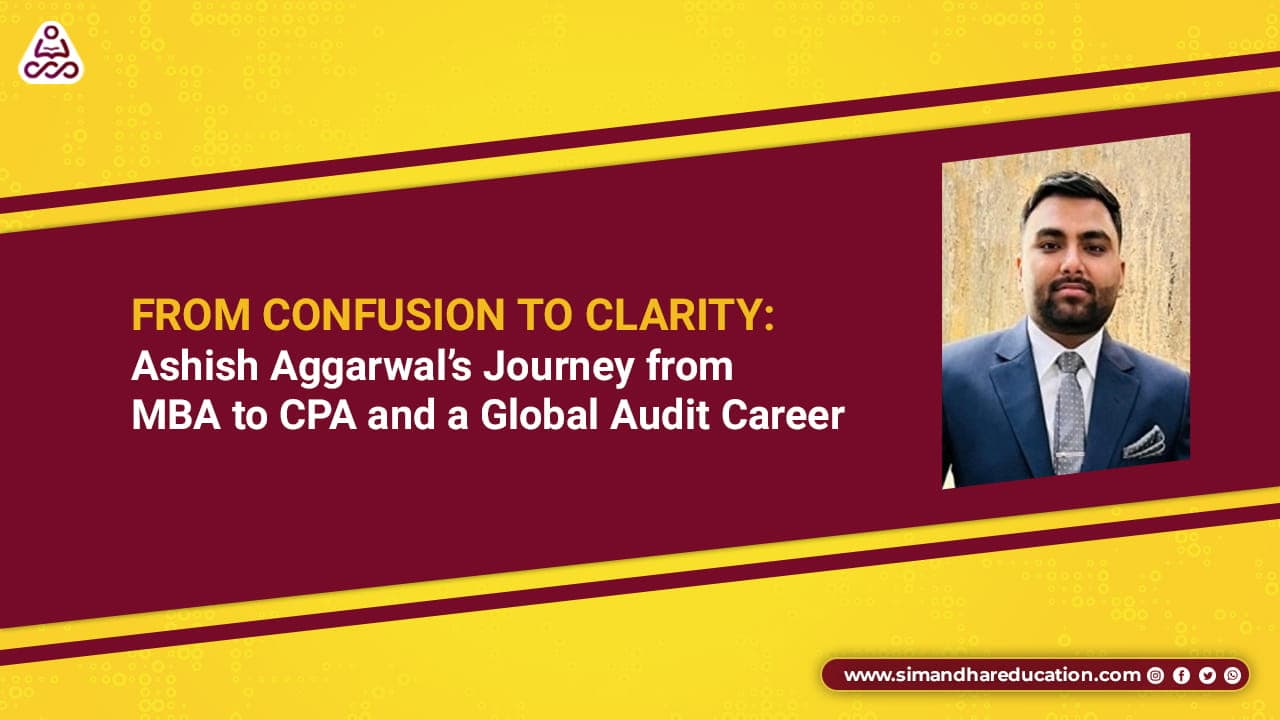
Table of Contents
- 1. Introduction
- 2. Why CPA After MBA? Identifying the Knowledge Gap
- 2.1. The Turning Point in Career Thinking
- 3. Why CPA Over CA or Other Alternatives?
- 3.1. Understanding the Global Shift in Accounting Roles
- 4. Early Challenges: The Cost of the Wrong Start
- 4.1. When Preparation Does Not Translate Into Progress
- 5. The Turning Point: Structured Preparation and the Right Ecosystem
- 5.1. From Passive Learning to Exam-Oriented Preparation
- 6. Preparation Strategy: Discipline Over Intensity
- 6.1. A Process-Oriented Study Model
- 6.2. The Role of Revision in Retention
- 6.3. Realistic Study Hours and Focus
- 7. One Critical Mistake: Avoiding Multi-Subject Preparation
- 7.1. The Illusion of Productivity
- 7.2. The Power of Single-Subject Focus
- 8. Subject Experience: The Reality of CPA Papers
- 8.1. FAR as a Confidence Builder
- 8.2. Auditing as the Most Challenging Paper
- 8.3. The Nature of Auditing Preparation
- 9. Timeline and Execution: Completing CPA Within a Year
- 9.1. Structured Exam Progression
- 9.2. Learning from Setbacks
- 10. Key Takeaways for CPA Aspirants
- 10.1. Focus Drives Results
- 10.2. Practice Determines Performance
- 10.3. Consistency Builds Momentum
- 10.4. Auditing Demands Complete Attention
- 11. Conclusion
Table of Contents
Introduction
Career progression in accounting is often misunderstood as a straight path defined by degrees and predefined routes. In reality, many professionals find themselves at a point where effort is not the constraint, but direction is. Ashish Aggarwal’s journey reflects this exact phase of professional introspection.
After completing his MBA and entering the workforce, he was already on a stable path. However, stability did not translate into long-term clarity. He identified a critical gap in his understanding of accounting and auditing, which are foundational to advancing into high-impact roles within the profession.
What followed was not a casual decision, but a strategic shift. Choosing CPA was not about adding another qualification. It was about correcting direction and aligning his career with global opportunities in audit and accounting.
Why CPA After MBA? Identifying the Knowledge Gap
Post-MBA, Ashish Aggarwal began working in audit-related functions, specifically handling travel and expense audits within the accounts payable domain. While this role provided exposure to financial processes, it remained operational rather than conceptual.
The Turning Point in Career Thinking
Over time, he realized that without strong conceptual depth in accounting principles and auditing frameworks, his career progression would plateau. The roles he aspired to required not just experience, but technical authority.
This realization became the defining moment. He understood that to move into core audit roles, especially those aligned with global firms, he needed structured and internationally relevant knowledge.
CPA emerged as the most logical and efficient pathway to achieve this transformation.
Why CPA Over CA or Other Alternatives?
Understanding the Global Shift in Accounting Roles
India has increasingly become a delivery hub for US-based accounting and auditing work. Global firms are building large teams in India to support international clients, particularly in audit, compliance, and financial reporting.
Ashish Aggarwal recognized that CPA directly aligns with these global requirements, especially in areas such as US GAAP and international audit practices.
At the same time, he acknowledged a structural limitation. Entry into Indian statutory audit roles is largely restricted to CA-qualified professionals. Given this constraint, CPA offered a more relevant and accessible route into global audit functions.
This was not a compromise. It was a targeted career decision aligned with market demand.
Early Challenges: The Cost of the Wrong Start
When Preparation Does Not Translate Into Progress
He initially enrolled with another course provider. However, the experience lacked depth and alignment with actual CPA exam requirements. The learning system was outdated, and the practice questions did not reflect the level or pattern of the real exam.
As a result, despite investing time, he struggled to build confidence and clarity.
Nearly six to seven months were lost in this phase. More importantly, it created self-doubt and slowed down momentum.
This highlights a critical insight for CPA aspirants. The quality of preparation is not defined by content alone, but by how closely it mirrors the actual exam environment.
The Turning Point: Structured Preparation and the Right Ecosystem
From Passive Learning to Exam-Oriented Preparation
A recommendation from peers led Ashish Aggarwal to re-evaluate his preparation strategy and switch to a more structured learning environment.
This shift brought a significant change in his approach. Faculty-led classes provided conceptual clarity, especially in subjects like Financial Accounting and Reporting and Regulation.
More importantly, the introduction of a rigorous practice system transformed his preparation. Solving multiple-choice questions and task-based simulations became a core part of his daily routine.
This was the phase where learning became outcome-driven rather than content-driven.
Concepts were no longer just understood. They were applied, tested, and reinforced through continuous practice.
Preparation Strategy: Discipline Over Intensity
A Process-Oriented Study Model
Ashish Aggarwal’s preparation strategy was built on structure, repetition, and consistency.
He followed a clear sequence. First, he completed conceptual lectures. Immediately after, he practiced questions related to the same topic. This ensured that learning was reinforced before moving forward.
The Role of Revision in Retention
Instead of postponing revision, he incorporated it into his weekly schedule. After completing a set of chapters, he revisited them to strengthen retention and eliminate weak areas.
Realistic Study Hours and Focus
Although his total study time extended to eight to ten hours daily, he identified that effective focus was closer to six hours. This distinction helped him avoid burnout and maintain consistency over a longer period.
One Critical Mistake: Avoiding Multi-Subject Preparation
The Illusion of Productivity
Initially, he attempted to study multiple subjects simultaneously. While this created a sense of productivity, it resulted in fragmented understanding and reduced retention.
The Power of Single-Subject Focus
He later shifted to focusing on one subject at a time. This change improved both efficiency and conceptual clarity.
The insight is simple yet powerful. CPA requires depth, and depth cannot be achieved through divided attention.
Subject Experience: The Reality of CPA Papers
FAR as a Confidence Builder
Financial Accounting and Reporting was relatively aligned with his preparation. The exam reflected the concepts and practice he had worked through, making it a more manageable experience.
Auditing as the Most Challenging Paper
Auditing, however, required a completely different approach. Despite his prior work experience in audit-related roles, the CPA auditing syllabus was conceptually deeper and more comprehensive.
Although his preparation for CIA Part 1 provided some foundational understanding, success in auditing required detailed reading and complete coverage of the material.
The Nature of Auditing Preparation
One key realization was that Auditing cannot be approached selectively. Every line in the study material is important, as questions can be framed from any section.
Timeline and Execution: Completing CPA Within a Year
Structured Exam Progression
Ashish Aggarwal appeared for his first exam in July 2025. This was followed by subsequent attempts in October, December, and January. He cleared his final paper in March.
Learning from Setbacks
An initial failure in Auditing did not derail his journey. Instead, it helped him refine his preparation and approach the subject with greater depth.
Completing all papers within approximately one year reflects not just effort, but structured execution.
Key Takeaways for CPA Aspirants
Focus Drives Results
Studying one subject at a time allows for deeper understanding and faster completion.
Practice Determines Performance
Conceptual clarity must be reinforced through continuous problem-solving and simulations.
Consistency Builds Momentum
Sustained, disciplined study is more effective than short bursts of intensity.
Auditing Demands Complete Attention
Every concept must be studied thoroughly, as selective preparation is not sufficient.
Conclusion
Ashish Aggarwal’s journey is a reflection of what happens when clarity meets execution.
Transitioning from an MBA background with limited accounting depth to becoming CPA-qualified was not an easy shift. It required acknowledging gaps, making difficult decisions, and committing to a structured path.
However, this transformation positioned him for opportunities that are aligned with global accounting and audit careers.
For students and professionals standing at a similar crossroads, this journey offers a clear perspective. Career growth is not defined by where you start, but by how effectively you realign when you recognize the gap.
The right direction, supported by consistent effort and the right preparation ecosystem, can redefine not just your qualification, but your entire career trajectory.
Planning to take CPA? Explore our CPA course