
From Big 4 Audit to US CPA: Harsh’s Focused Journey of Discipline, Strategy, and Support
Discover how Harsh completed the US CPA while working in Big 4 audit roles. A real journey covering preparation strategy, challenges, and professional growth.
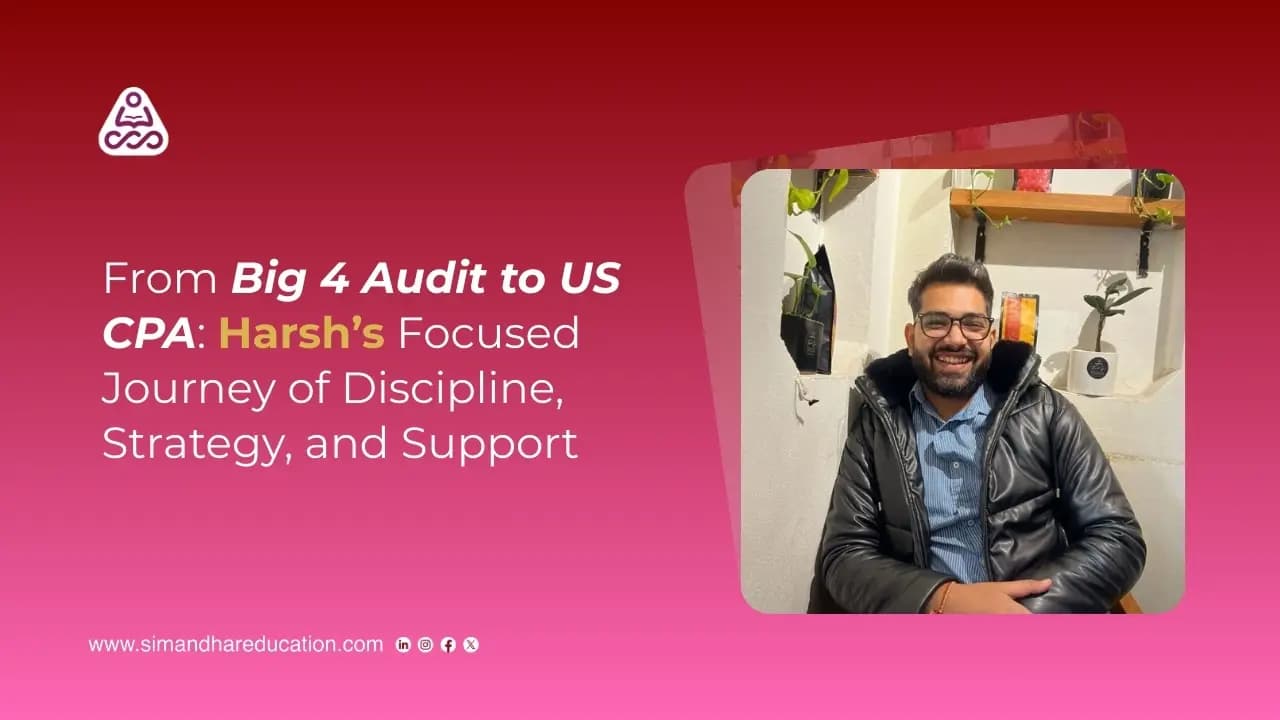
Table of Contents
Introduction
For many accounting professionals, the decision to pursue the US CPA is driven by long-term career clarity rather than short-term ambition. Harsh’s journey reflects how a working audit professional navigated demanding roles across Big 4 firms while completing the CPA qualification in a structured and time-bound manner.
His experience highlights a reality many aspirants face. Balancing full-time work, managing uncertainty around preparation, and staying committed to a rigorous professional exam all require informed decisions made at the right time.
Why CPA? A Career-Driven Decision
Harsh’s motivation to pursue CPA emerged during his professional experience in audit at KPMG. With a clear intent to grow within the audit domain, he recognised that advancing in the same field would require a globally recognised qualification.
Peer influence also played a key role in shaping this decision. One of Harsh’s colleagues, who was already pursuing CPA, provided practical insights and motivation that reinforced the value of the qualification. The decision was deliberate and aligned closely with Harsh’s long-term career goals in audit.
Professional Background and Industry Exposure
Harsh’s career journey includes experience across leading professional services firms, transitioning from KPMG to Deloitte, and later joining PwC in an audit role.
Despite working in audit, Harsh observed that the CPA exam demands a broader and deeper conceptual understanding than what early-career roles typically offer. CPA exam questions often test end-to-end judgment and scenario-based application, which may not always align with the limited scope of associate-level responsibilities.
Choosing the Right Preparation Partner
While evaluating CPA preparation options, Simandhar Education stood out for Harsh due to strong peer recommendations, consistent online presence, and clarity around structure and support.
For a working professional, administrative complexities such as registration, documentation, and exam scheduling can become significant distractions. Having a reliable team manage these aspects allowed Harsh to focus fully on preparation. Timely delivery of study materials and responsive guidance contributed significantly to his confidence throughout the journey.
The Biggest Challenge: Time Management While Working
The most demanding aspect of Harsh’s CPA journey was managing preparation alongside a full-time audit role. Busy seasons and long working hours required difficult trade-offs, including reduced personal time with family and friends.
One strategy that proved particularly effective was booking exam dates early. The CPA’s flexible scheduling system can often lead to delays and indecision. By fixing exam dates in advance, Harsh created urgency, structure, and accountability, which helped eliminate the tendency to postpone preparation.
Study Strategy and Timeline
Harsh completed the entire CPA journey in approximately 10 months, following a disciplined and phased approach:
● The first two exams were taken with gaps of two to three months
● For the final two exams, Harsh planned around 40 days of leave from work
● During this phase, study intensity increased significantly, with up to 16 hours per day dedicated to preparation
Additionally, impending changes under the CPA Evolution model influenced Harsh’s decision to complete the exams within a defined timeline, helping him avoid unnecessary uncertainty.
Audit Experience vs CPA Exam Reality
Despite having hands-on audit experience, Harsh found that the CPA exam, particularly the Audit section, presented unique challenges. Exam scenarios often require a holistic understanding of audit processes from planning through reporting, which early-stage professionals may not encounter fully in practice.
This reinforced an important insight. Professional experience supports preparation, but it does not replace structured, exam-focused study. Certain CPA concepts require deliberate revision regardless of work background.
Role of Online Learning and Peer Ecosystem
Due to professional commitments, Harsh relied heavily on online learning. Recorded lectures, structured Becker content, accurate mock exams, and focused revision tools allowed flexibility without compromising depth.
Peer discussion groups and forums played a vital role in maintaining momentum. These platforms enabled timely doubt resolution, shared updates, and encouragement, especially during intensive study phases.
Advice from Harsh to Working CPA Aspirants
Reflecting on his journey, Harsh shares a few practical takeaways for fellow professionals:
● Fix exam dates early to create structure
● Trust the institute to manage administrative processes
● Accept temporary sacrifices as part of long-term success
● Stay connected with faculty, mentors, and peers
● Focus on disciplined consistency rather than perfection
According to Harsh, once the exam date is fixed, everything else starts aligning.
Conclusion
Harsh’s CPA journey demonstrates that completing the US CPA while working in demanding audit roles is challenging, yet entirely achievable with clarity, discipline, and the right support ecosystem.
Success in CPA is not about avoiding difficulty. It is about approaching the process with structure, intent, and commitment. For professionals willing to focus intensely for a defined period, the outcome extends beyond exam completion and builds a strong foundation for sustained global career growth.
Planning to take CPA? Explore our CPA course