
AI Skills for B.Com & BBA Students to Get Finance Job Ready
Explore the best AI skills, finance tools and global certifications for B.Com and BBA students to prepare for accounting, finance, analytics and other career opportunities.
Table of Contents
- 1. Where Do B.Com and BBA Students Stand Academically?
- 1.1. What B.Com students already know
- 1.2. What BBA students already know
- 1.3. B.Com vs BBA: Which AI skills should you prioritize?
- 2. What AI Skills Should B.Com and BBA Students Learn?
- 2.1. AI-assisted financial data analysis
- 2.2. AI for budgeting and forecasting
- 2.3. AI-powered accounting and reporting
- 2.4. Data visualization and business intelligence
- 2.5. AI-assisted financial research
- 2.6. AI prompting and critical thinking
- 3. Which AI Tools Should Commerce Students Learn?
- 3.1. ChatGPT - For financial research and analysis
- 3.2. Microsoft Excel with AI assistance - For financial operations
- 3.3. Microsoft Power BI - For financial dashboards
- 3.4. QuickBooks and Xero - For accounting productivity
- 3.5. Microsoft Copilot - For business productivity
- 3.6. TallyPrime - For practical accounting knowledge
- 4. Which AI Skills and Tools Should You Combine to Become a Job Ready?
- 4.1. What should you practice?
- 5. Which Global Certifications Can B.Com and BBA Students Pursue?
- 5.1. Which one should you choose?
- 6. When Should You Start Learning AI: During B.Com/BBA or After Graduation?
- 7. How Simandhar Education Helps B.Com and BBA Students Prepare for Finance Careers
- 8. Conclusion
- 9. Frequently Asked Questions (FAQs)
A B.Com or BBA degree gives you a foundation in accounting, finance, business management and economics. But is your academic knowledge enough to prepare you for your first finance job?
Not always.
Employers increasingly expect fresh graduates to work with financial data, prepare reports, analyze business performance, and use digital tools. Artificial intelligence (AI) is also becoming part of these everyday responsibilities.
For example, an accountant may use AI to organize financial records and identify unusual transactions. A financial analyst may use AI-powered tools to study trends, prepare forecasts, and interpret business data. Similarly, a business analyst may use Power BI to turn complex information into reports that managers can understand.
This does not mean you need to become a programmer or learn every AI tool available.
You need to understand how AI applies to your chosen career and develop the right combination of finance knowledge, analytical skills, and practical tool experience.
So, if you are pursuing B.Com or BBA, or have recently graduated, this guide will help you understand the AI skills for commerce students, the tools worth learning, and the global certifications that can support your career goals.
1. Where Do B.Com and BBA Students Stand Academically?
Before learning AI, understand what you already know from your degree. Your academic background determines which skills you should build next.
Although B.Com and BBA students study different subjects, both degrees provide a useful starting point for finance and business careers.
What B.Com students already know
A B.Com degree generally introduces students to:
- Financial accounting and bookkeeping.
- Cost and management accounting.
- Business law and taxation.
- Financial management.
- Auditing and business economics.
- Basic financial statements and reporting.
This knowledge can help you explore careers in accounting, taxation, financial reporting, auditing, and financial analysis.
What should you build next?
Focus on practical accounting software, advanced Excel, financial data analysis, Power BI and AI tools that can support accounting and reporting activities.
What BBA students already know
A BBA degree generally covers:
- Business management and administration.
- Marketing and organizational behavior.
- Business finances.
- Business economics.
- Operations and human resource management.
- Business communication and decision-making.
This foundation can help you explore careers in financial planning, business analysis, management, operations, and corporate finance.
What should you build next?
Focus on business analytics, financial modelling, data visualization, AI-assisted research, budgeting and forecasting, and business reporting.
B.Com vs BBA: Which AI skills should you prioritize?
| Academic background | Skills to strengthen | Suitable career directions |
|---|---|---|
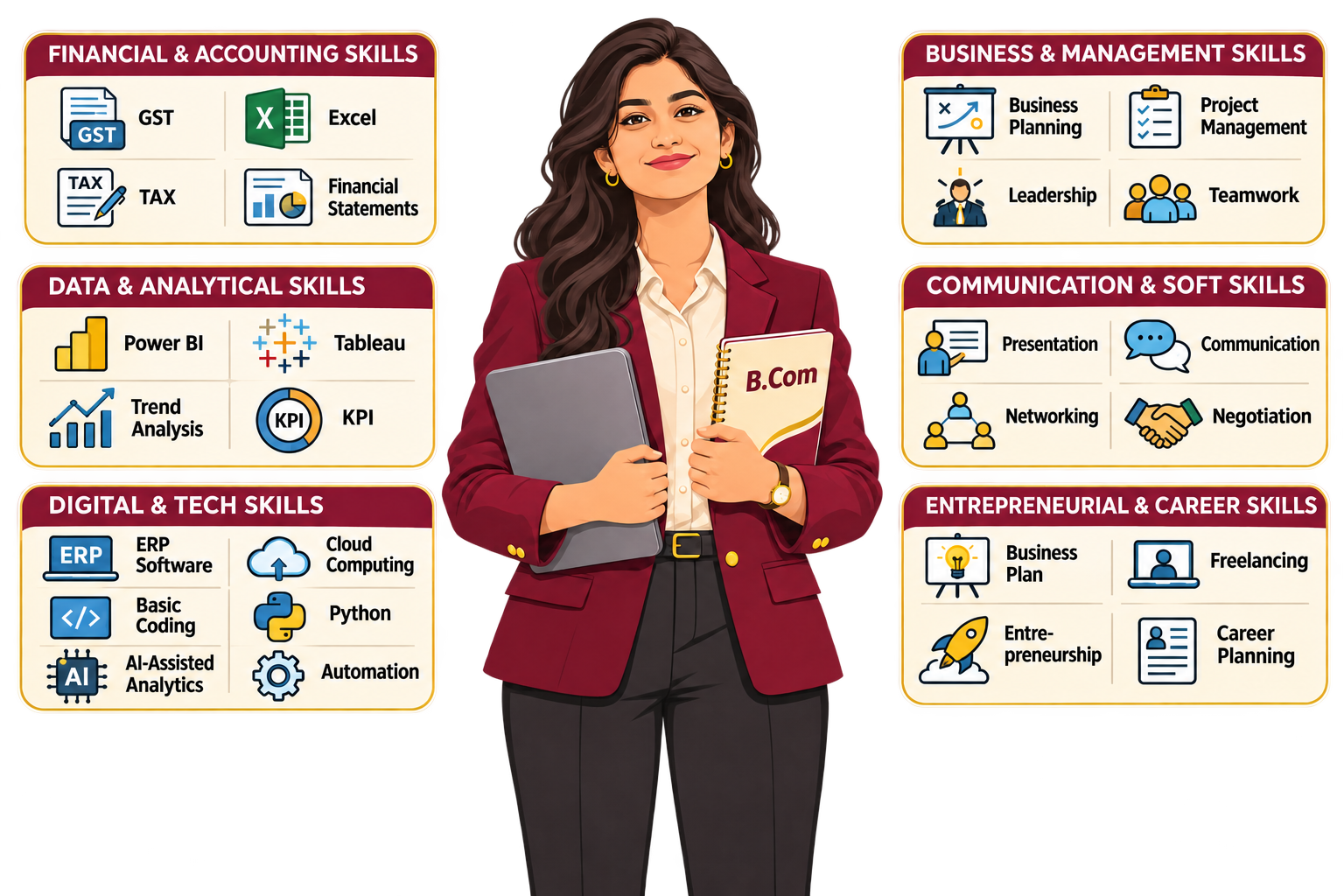
| B.Com | Accounting automation, Excel, financial reporting, taxation tools and Power BI | Accountant, audit associate, tax associate, financial analyst |
| BBA | Business analytics, financial modelling, forecasting, data visualization and AI-assisted research | Business analyst, finance associate, FP&A analyst, operations analyst |
2. What AI Skills Should B.Com and BBA Students Learn?
You do not need to learn artificial intelligence from a technical or programming perspective to use it in finance.
Start with skills that solve practical business problems. The following AI skills for commerce students can help you become more comfortable with the responsibilities of an entry-level finance role.
1. AI-assisted financial data analysis
Finance professionals regularly work with large amounts of financial information. Analyzing this information manually can take considerable time.
AI tools can help organize data, identify patterns, summarize financial information, and highlight areas that need further investigation.
What should you learn?
- Cleaning and organizing financial datasets.
- Identifying unusual expenses and transaction patterns.
- Summarizing financial performance.
- Comparing monthly and quarterly financial results.
- Interpreting financial trends.
Take a sample company's monthly expense data and use AI to identify spending patterns. Then prepare a short report explaining the major changes.
2. AI for budgeting and forecasting
Budgeting and forecasting are important activities in financial planning and analysis (FP&A).
Companies use historical financial data, revenue estimates, and expense projections to plan their future activities.
AI can support this process by helping professionals analyze historical patterns and prepare initial forecasts.
What should you learn?
- Revenue and expense forecasting.
- Budget preparation.
- Variance analysis.
- Cash flow projections.
- Scenario analysis.
Prepare a basic annual budget using Excel. Use an AI assistant to explore different revenue and expense scenarios. Compare the results and understand why the assumptions matter.
Remember, AI-generated forecasts are estimates. You must validate the assumptions and figures before using them for business decisions.
3. AI-powered accounting and reporting
Accountants handle invoices, transaction records, reconciliations, and financial reports. AI-enabled accounting tools can reduce repetitive work and help organize financial information.
What should you learn?
- Invoice data extraction.
- Transaction categorization.
- Bank reconciliation support.
- Financial report summarization.
- Identify possible inconsistencies in accounting records.
Work with sample invoices and transaction records. Use accounting software to organize the entries and AI assistance to identify missing information or unusual transactions.
These are useful AI skills required for accountants, particularly those entering accounting operations, bookkeeping and financial reporting roles.
4. Data visualization and business intelligence
Knowing how to read financial data is important. Knowing how to present it clearly is equally valuable.
For example, a finance associate may need to explain why operating expenses increased or why revenue declined during a particular quarter.
Data visualization tools help convert spreadsheets into understandable dashboards.
What should you learn?
- Creating charts and dashboards.
- Analyzing financial performance.
- Tracking key performance indicators (KPIs).
- Comparing actual results against budgets.
- Presenting business insights.
Create a Power BI dashboard showing revenue, expenses, profit margins, and monthly performance.
5. AI-assisted financial research
Finance professionals need to research companies, industries, markets, and financial developments.
AI can help summarize lengthy documents, organize research findings, and explain unfamiliar financial concepts.
What should you learn?
- Researching company financial performance.
- Summarizing annual reports.
- Comparing business performance.
- Extracting information from financial documents.
- Preparing research notes and presentations.
Select two publicly listed companies and compare their revenue, profitability, and expenses using their annual reports. Use AI to organize your findings but verify every financial figure against the original documents.
6. AI prompting and critical thinking
Knowing how to use an AI tool is not enough. You must know how to give clear instructions and evaluate the responses.
A vague prompt often produces a vague answer. A well-structured prompt gives the tool the context it needs.
What should you learn?
- Giving clear instructions.
- Providing relevant business contexts.
- Specifying the required output.
- Asking follow-up questions.
- Checking calculations and factual accuracy.
- Identifying incorrect or unsupported AI responses.
For example, instead of asking:
"Analyze this company's finances."
Try:
"Analyze the following quarterly financial data. Compare revenue, operating expenses, and net profit. Identify the major changes, calculate the percentage differences, and present the findings in a concise business report. Do not assume any missing figures."
This skill is useful across accounting, financial analysis, business reporting, and management roles.
3. Which AI Tools Should Commerce Students Learn?
You do not need to subscribe to multiple expensive AI platforms. Start with a few tools and understand how to use them in practical finance assignments.
Here are some AI tools for accounting productivity, business analysis, and financial reporting worth exploring.
1. ChatGPT - For financial research and analysis
Best suited for: B.Com and BBA students interested in accounting, finance, business analysis and research.
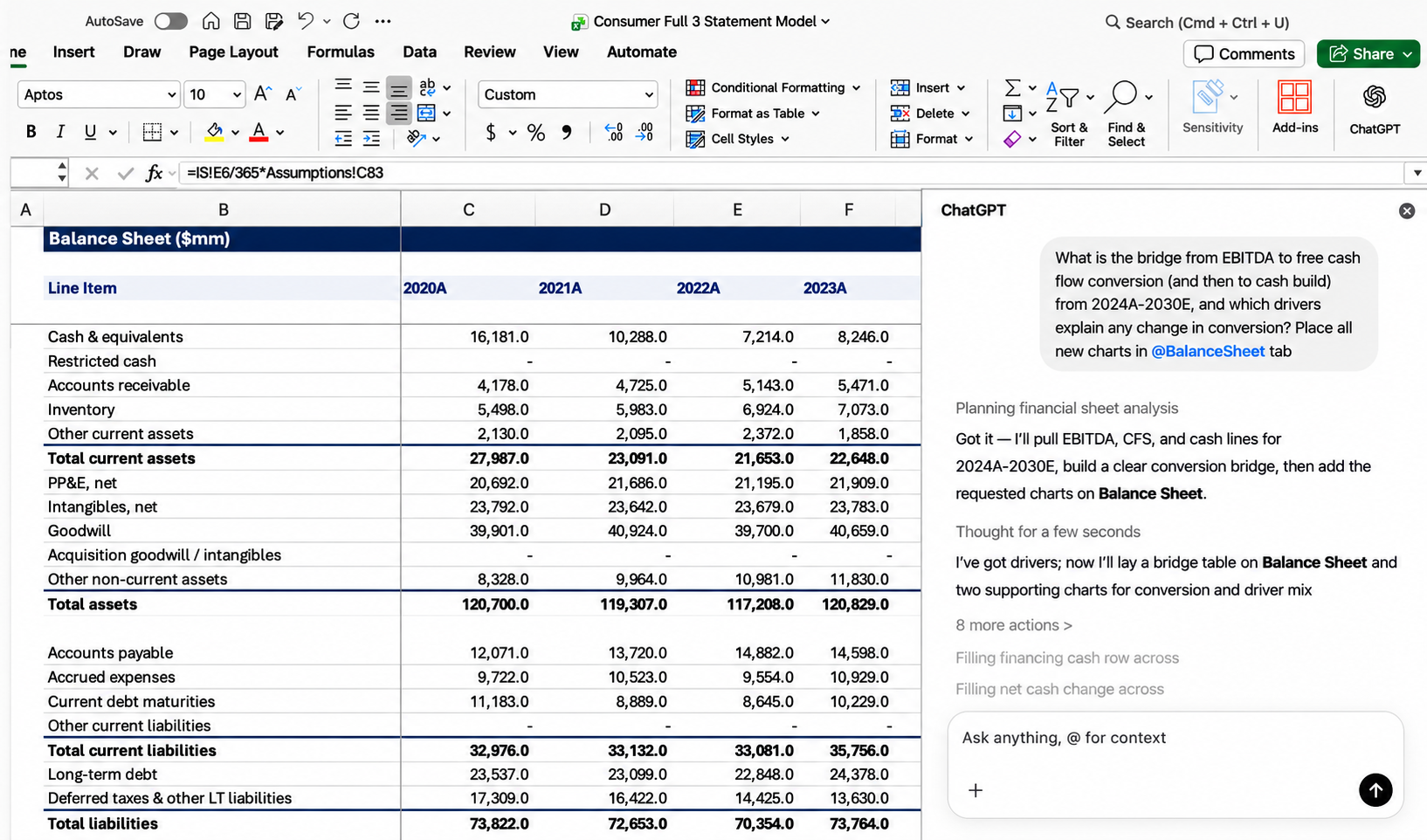
You can use ChatGPT to:
- Understand accounting and financial concepts.
- Summarize annual reports.
- Generate Excel formulas.
- Organize financial research.
- Analyze sample datasets.
- Prepare interview practice questions.
For example, you can upload a sample financial dataset and ask ChatGPT to explain the changes in revenue and expenses.
Always verify its calculations and conclusions before using them.
2. Microsoft Excel with AI assistance - For financial operations
Best suited for: Students interested in accounting, financial reporting, budgeting, and financial analysis.
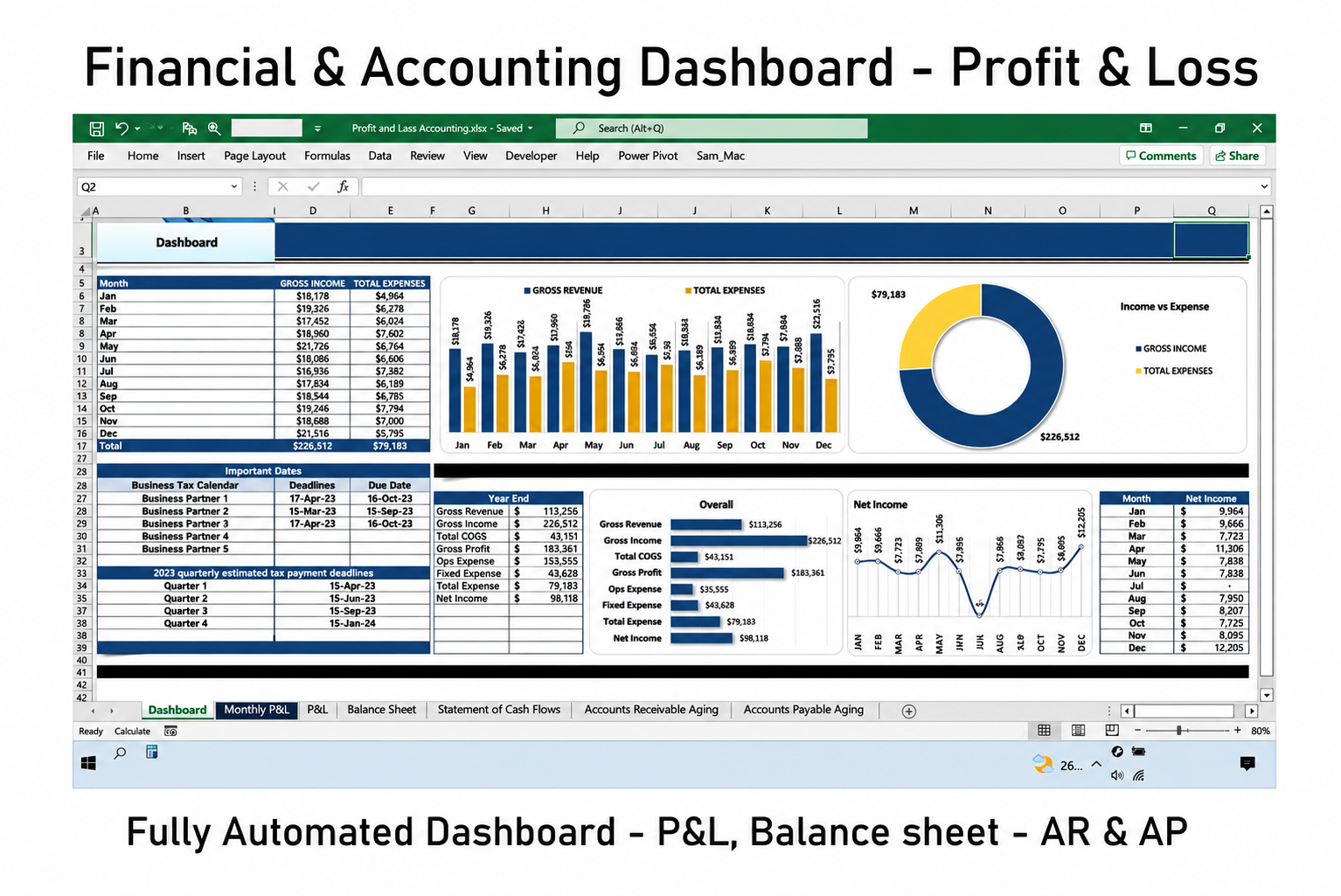
Excel remains an important tool for finance professionals.
Learn:
- Formulas and functions.
- Pivot Tables and Pivot Charts.
- XLOOKUP and SUMIFS.
- Data cleaning.
- Conditional formatting.
- Budgeting and financial modelling.
You can also explore Microsoft Copilot features available in supported Microsoft 365 plans to assist with spreadsheet analysis and formula-related tasks.
3. Microsoft Power BI - For financial dashboards
Best suited for: Students interested in financial analysis, business intelligence, and FP&A.
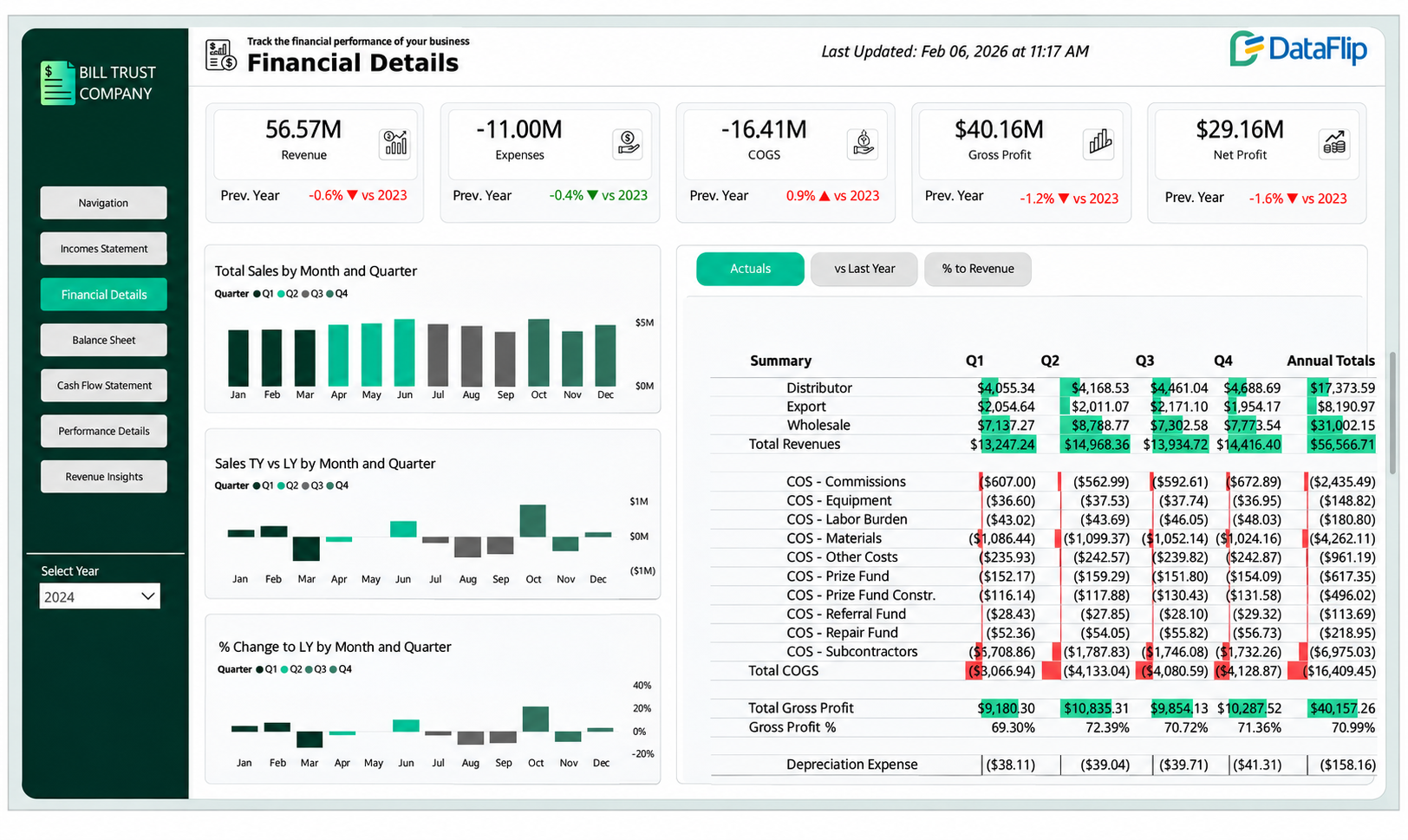
Power BI helps you convert financial datasets into interactive dashboards.
Learn how to:
- Import data from Excel.
- Clean and transform datasets.
- Create relationships between data.
- Build financial dashboards.
- Use DAX for calculations.
- Present business performance through visual reports.
Why is Power BI important?
Power BI for B.Com and BBA students can be particularly useful when applying for entry-level financial analysts, reporting analysts and business analyst roles.
4. QuickBooks and Xero - For accounting productivity
Best suited for: Students interested in bookkeeping, accounting operations, and financial reporting.
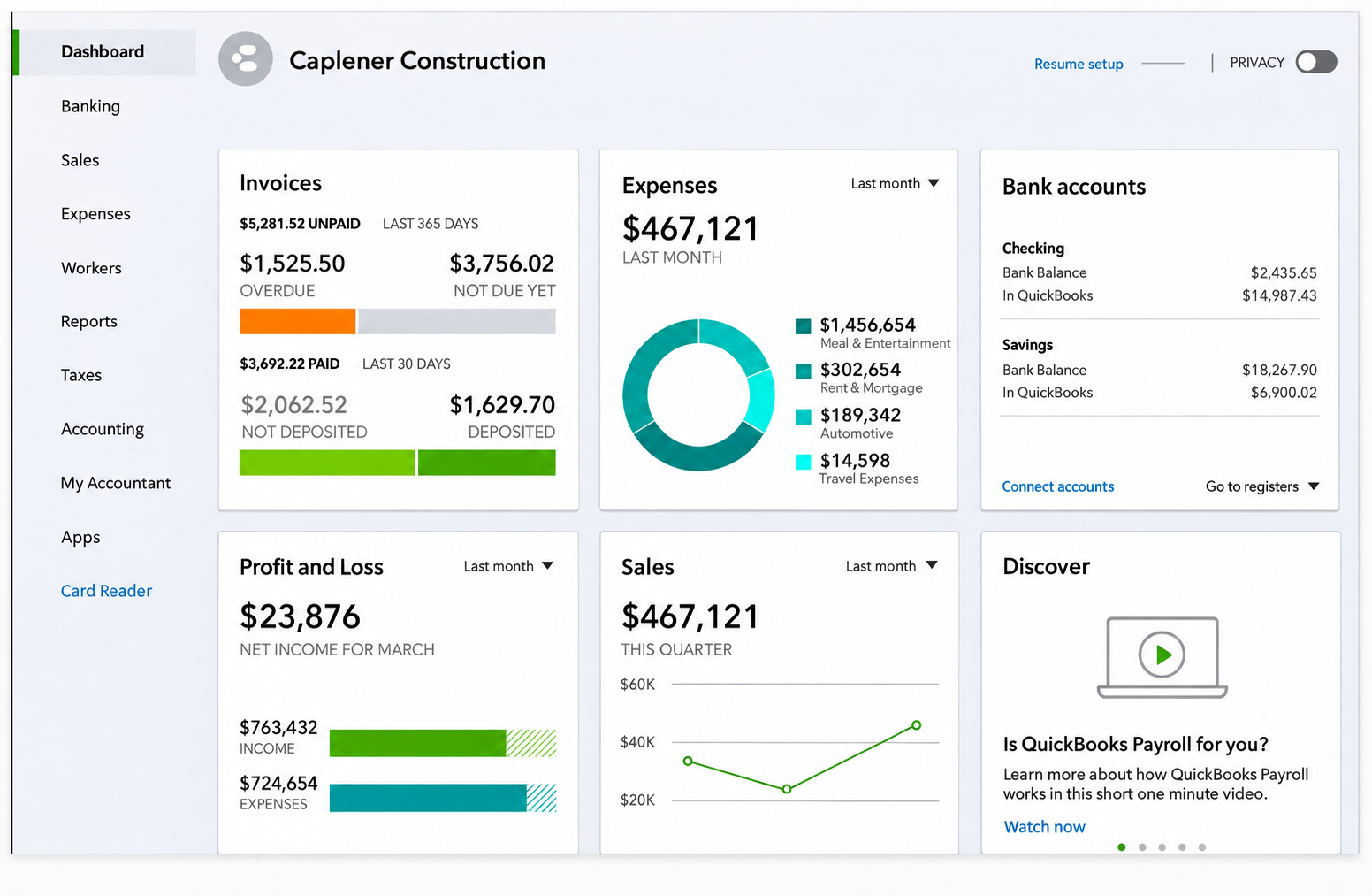
Explore accounting platforms such as:
- QuickBooks - For bookkeeping, invoicing, expense tracking, and financial reports.
- Xero - For accounting records, bank reconciliation, invoicing, and reporting.
Learn their core accounting workflows first. Explore their available automation and AI features as you become comfortable with the software.
5. Microsoft Copilot - For business productivity
Best suited for: BBA students and commerce graduates interested in corporate finance and business operations.
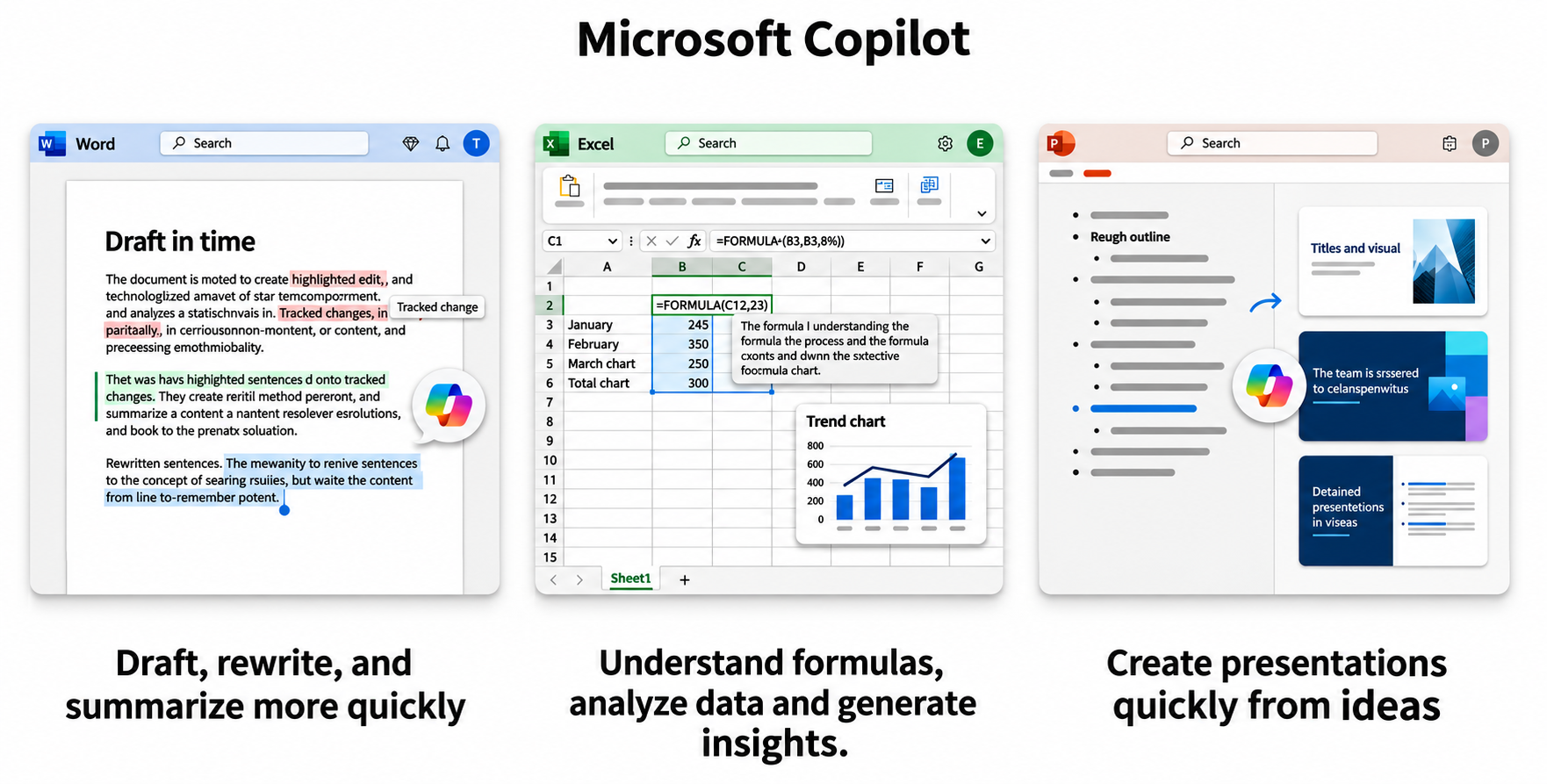
Copilot can assist with everyday business tasks, depending on the application and subscription available.
You can explore its use for:
- Summarizing business documents.
- Drafting reports.
- Preparing presentation outlines.
- Organizing meeting notes.
- Working with spreadsheets.
6. TallyPrime - For practical accounting knowledge
Best suited for: B.Com students interested in accounting, taxation and financial operations.
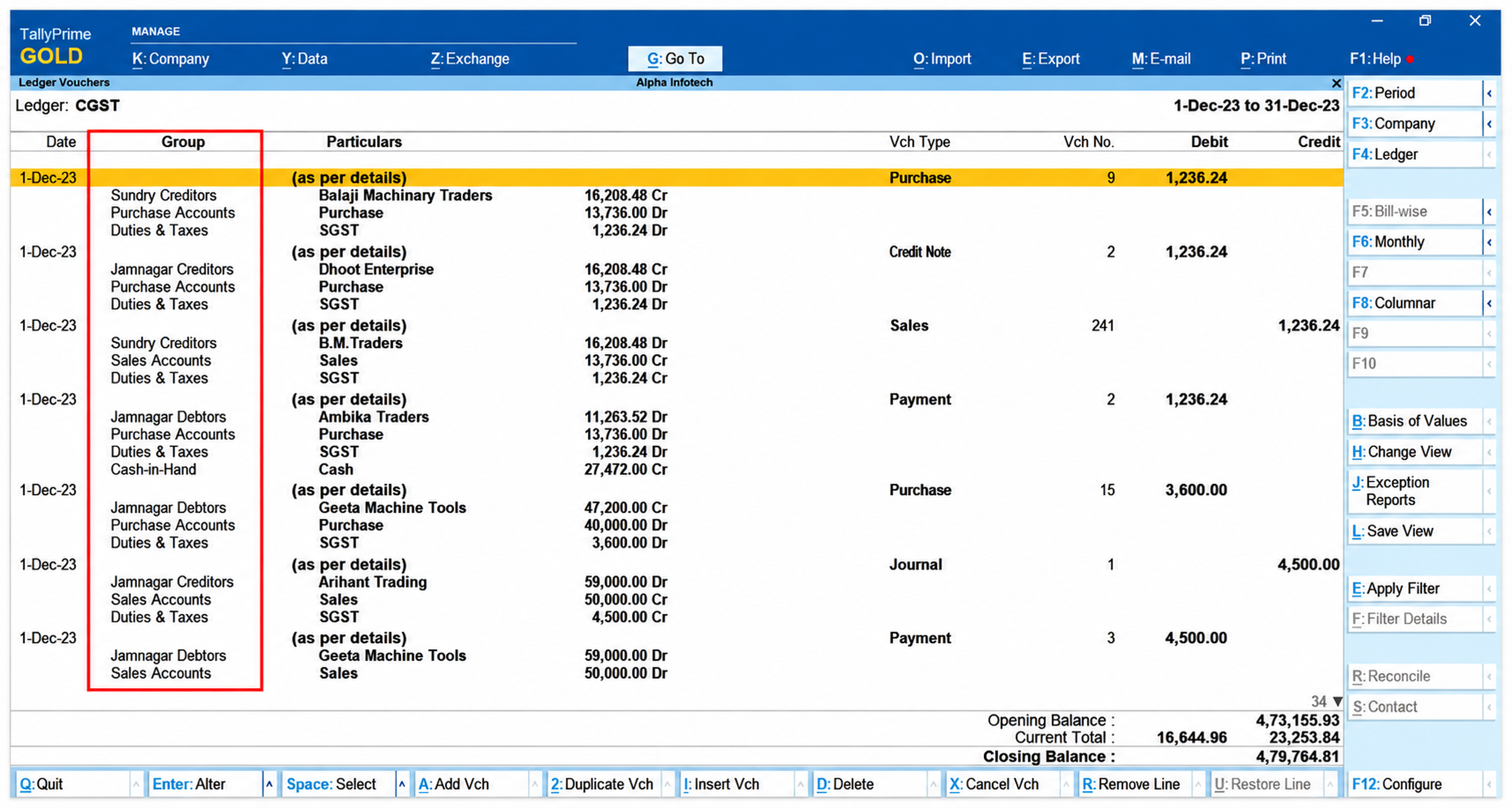
Learn how to work with:
- Ledger creation.
- Voucher entries.
- GST accounting.
- Inventory management.
- Financial statements.
- Business reports.
TallyPrime is particularly relevant when exploring accounting opportunities in Indian businesses.
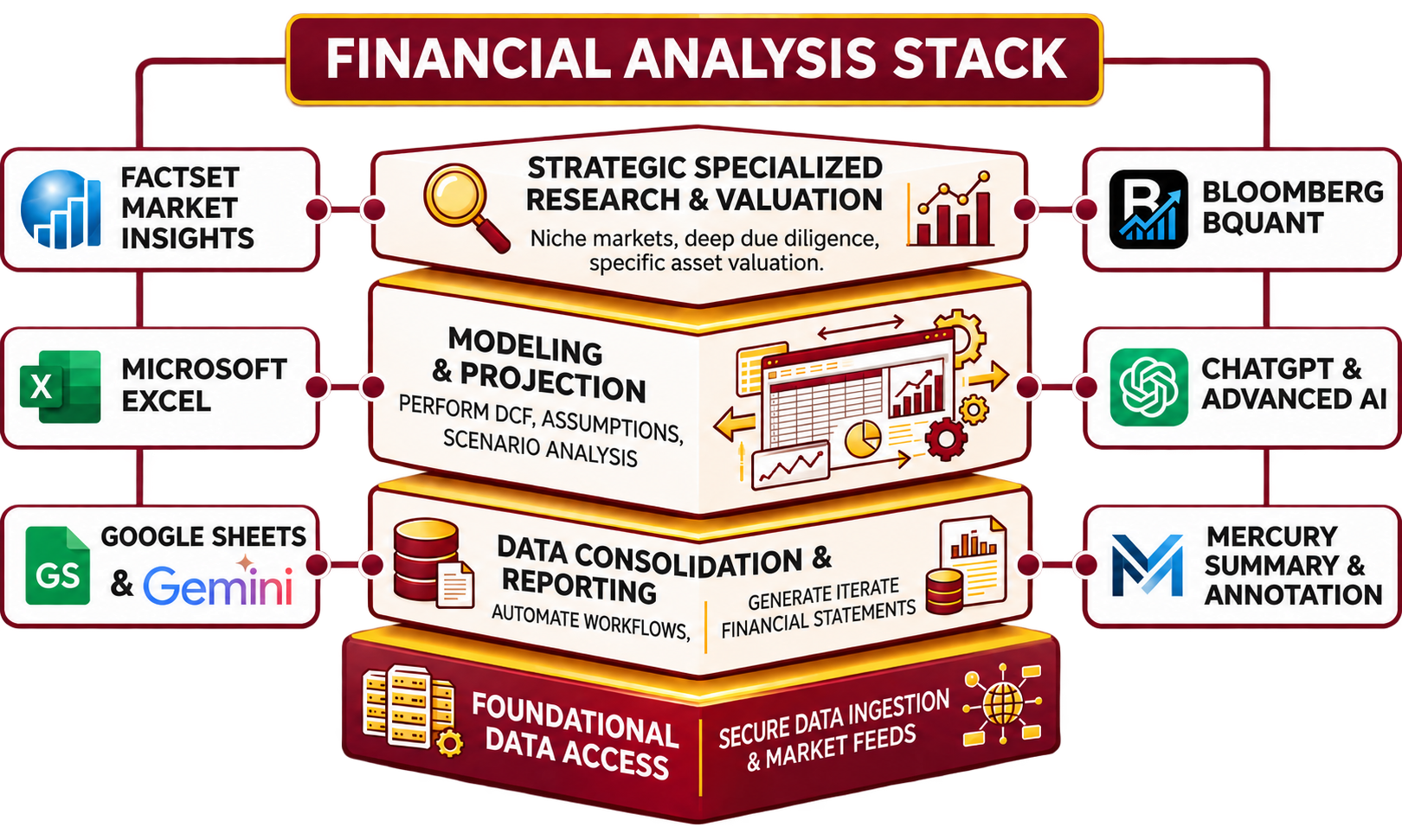
A useful combination:
Learn ChatGPT for research and assistance, Excel for calculations, Power BI for dashboards and an accounting platform such as TallyPrime or QuickBooks for practical accounting workflows.
You will have a stronger practical foundation than someone who has only completed theoretical AI courses.
4. Which AI Skills and Tools Should You Combine to Become a Job Ready?
Learning individual AI tools is useful but knowing how to apply them to finance-related tasks is more important. Your tool combination should depend on the career you want to pursue.
| Career interest | Skills to develop | Tools to learn |
|---|---|---|
| Accountant | Bookkeeping, financial reporting, reconciliation and accounting automation | TallyPrime, QuickBooks, Excel, ChatGPT |
| Financial Analyst | Financial modelling, budgeting, forecasting and data analysis | Advanced Excel, Power BI, ChatGPT, Copilot |
| Business Analyst | Business data analysis, KPI tracking and data visualization | Power BI, Excel, ChatGPT, Copilot |
| Tax Associate | Tax research, financial documentation and compliance | Excel, TallyPrime, QuickBooks, ChatGPT |
| Internal Auditor | Risk assessment, audit documentation and data analysis | Excel, Power BI, ChatGPT, audit tools |
What should you practice?
- Prepare a financial report using Excel.
- Create a business performance dashboard using Power BI.
- Analyze sample transactions using AI assistance.
- Build a basic budget and forecast using historical financial data.
5. Which Global Certifications Can B.Com and BBA Students Pursue?
AI skills can improve your productivity, but professional qualifications help you develop specialized knowledge in accounting, finance, auditing, and taxation.
Choose a certification based on your career interest rather than following what everyone else is pursuing.
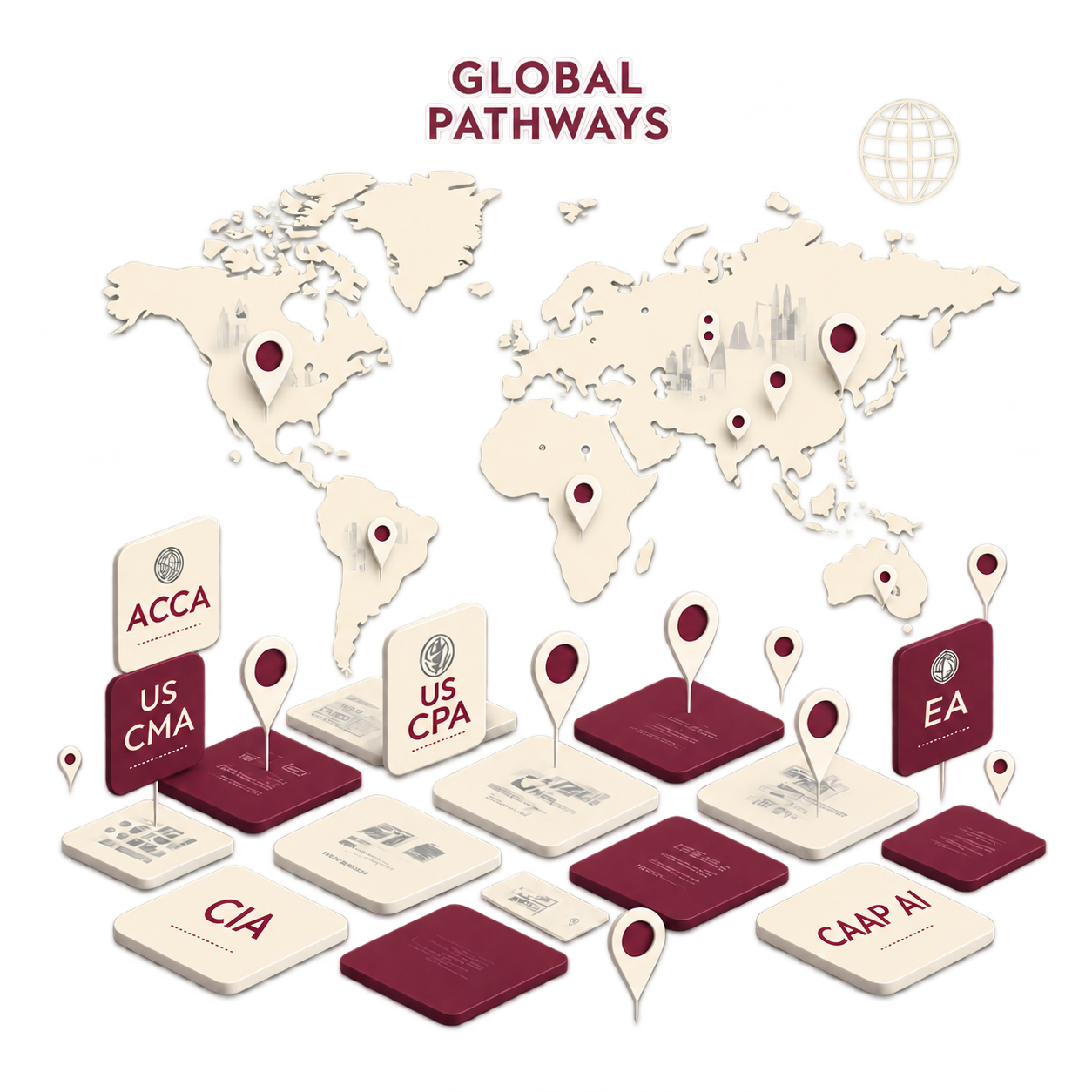
| Global certification | Suitable career interest | AI and technical skills to combine |
|---|---|---|
| US CMA | Management accounting, FP&A and corporate finance | Excel, Power BI, financial modelling and forecasting |
| US CPA | Accounting, auditing, taxation and financial reporting | Excel, AI-assisted research and accounting automation |
| ACCA | International accounting, audit and financial management | Excel, Power BI and accounting software |
| CIA | Internal audit, risk management and compliance | Excel, Power BI and data analytics |
| EA | US taxation and tax compliance | Excel, tax research and accounting software |
Which one should you choose?
- Interested in budgeting, forecasting, and corporate finance? Explore US CMA.
- Interested in accounting, auditing, and taxation? Explore US CPA.
- Interested in international accountancy? Explore ACCA.
- Interested in internal audit and risk management? Explore CIA.
- Interested in US taxation? Explore EA.
Check the respective governing body's eligibility requirements before enrolling. A professional certification can strengthen your profile, but it does not guarantee employment.
6. When Should You Start Learning AI: During B.Com/BBA or After Graduation?
The best time to start learning AI is during your graduation. You do not have to wait until you complete your degree to develop practical skills.
Here is a simple learning roadmap based on your academic stage.
| Academic stage | What should you learn? | Your learning goal |
|---|---|---|
| B.Com/BBA - First year | Basic Excel, ChatGPT and commerce fundamentals | Build your foundation |
| B.Com/BBA - Second year | Advanced Excel, Power BI and accounting software | Develop practical skills |
| B.Com/BBA - Final year | AI applications, financial analysis and professional certification options | Prepare for job opportunities |
| After graduation | Specialized AI tools, global certifications and practical projects | Build a career-focused profile |
7. How Simandhar Education Helps B.Com and BBA Students Prepare for Finance Careers
A commerce degree gives you an academic foundation, but building a career in global finance requires specialized knowledge and practical skills. Simandhar Education offers professional certification programmes such as US CPA, US CMA, ACCA, CIA and EA, along with its Certified AI Accounting Professional (CAAP) programme to help students explore AI applications in accounting and finance.
With 100% live classes, expert faculty guidance and access to Becker exam preparation resources for US CPA and US CMA, students receive structured support throughout their learning journey. Simandhar also provides placement assistance, including resume development, interview preparation, skills development and industry readiness support to help students prepare for opportunities in Big 4 firms and MNCs.
Conclusion
Your B.Com or BBA degree is a starting point, not the limit of your career options.
You can build a stronger professional profile by combining your academic knowledge with AI tools, practical finance skills, and a relevant global certification.
If you enjoy accounting, explore accounting automation and financial reporting. If financial analysis interests you, focus on Excel, Power BI, financial modelling, and forecasting. If you prefer auditing or taxation, develop the relevant domain knowledge and learn how AI can support research, documentation, and data analysis.
You do not need to master every AI tool or pursue multiple certifications. Identify your career interest, build the right skills, and practice applying them to real business problems.
The aim is simple: when you apply for your first finance job, you should be able to demonstrate not only what you studied but also what you can do with that knowledge.
8. Frequently Asked Questions (FAQs)
1. What AI skills should B.Com students learn?
B.Com students should focus on AI-assisted financial analysis, accounting automation, Excel, Power BI, financial reporting and AI prompting. These skills can support careers in accounting, taxation, auditing, and financial analysis.
2. Which AI skills are required for finance jobs?
The most useful skills include financial data analysis, budgeting and forecasting, data visualization, accounting automation, financial research, and AI-assisted reporting. The exact requirements depend on the job role and employer.
3. Which AI tools are best for finance students?
Start with ChatGPT, Microsoft Excel, Power BI, and Microsoft Copilot. You can also explore TallyPrime, QuickBooks, and Xero if you are interested in accounting and bookkeeping.
4. Can B.Com students learn AI without coding?
Yes. You can learn to use AI tools without programming knowledge. Start with ChatGPT, Excel, Power BI and accounting software. Focus on applying these tools to financial calculations, reporting, budgeting, and data analysis.
5. What are the best AI courses after B.Com?
Look for courses that combine practical AI applications with accounting, finance, and business analytics. You can also explore professional programmes such as CAAP alongside global certifications like US CMA, US CPA, ACCA, CIA, or EA, depending on your eligibility and career interests.
6. Is Power BI useful for B.Com and BBA students?
Yes. Power BI helps commerce graduates analyze financial information, create dashboards, and present business performance. It can be useful for aspiring financial analysts, reporting analysts, business analysts, and FP&A professionals.
7. Which global certification is best after B.Com or BBA?
There is no single best certification for everyone. US CMA is worth exploring management accounting and financial planning, US CPA for accounting and auditing, ACCA for international accountancy, CIA for internal auditing and EA for US taxation. Your career interest and eligibility should guide your decision.
8. How can Simandhar Education help students prepare for finance careers?
Simandhar Education offers global professional certification programmes such as US CPA, US CMA, CIA, EA, and ACCA. It also offers the CAAP programme to develop practical AI knowledge for accounting and finance. Students receive access to live classes, faculty guidance, learning resources, mentorship and placement assistance to support their professional development.