
How to Register for ACCA in India? Complete Step-by-Step Guide
Thu Jun 25 2026
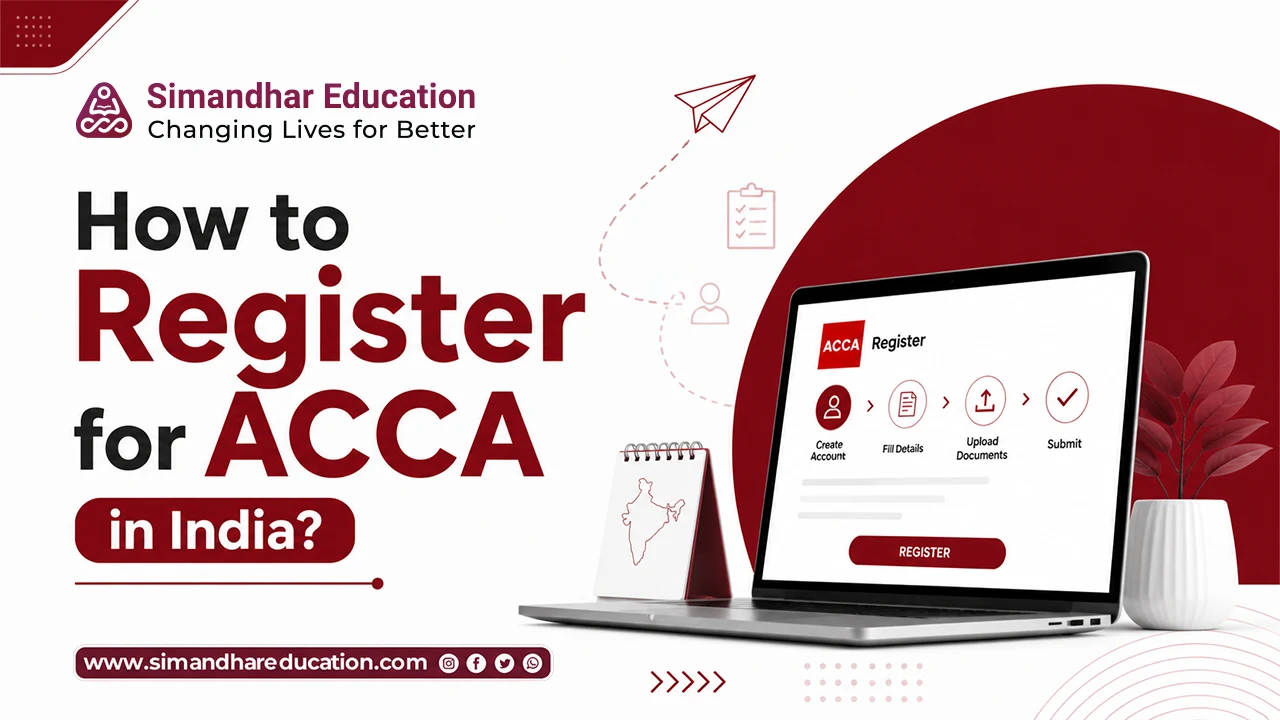
Table of Contents
ACCA is a globally recognized accounting qualification that helps students and finance professionals build careers in accounting, audit, taxation, and business finance.
The registration process is simple if you understand the eligibility requirements, documents needed, and application steps.
The how to register ACCA India process includes checking eligibility, creating an ACCA account, submitting documents, paying the required fees, and starting exam preparation.
Whether you are a student, graduate, or working professional, ACCA provides a flexible pathway to build an international finance career.
What Is ACCA?
ACCA means Association of Chartered Certified Accountants.
It is a global professional accounting qualification designed to develop skills in:
- Financial accounting
- Management accounting
- Audit and assurance
- Taxation
- Financial management
- Business strategy
ACCA professionals work across different industries, including multinational companies, Big 4 firms, consulting organizations, and finance departments.
The qualification is recognized globally and helps professionals explore opportunities in more than one country.
Who Can Register for ACCA in India?
Before starting the ACCA registration process India, candidates should understand the eligibility requirements.
Students who have completed Class 12 or equivalent education can begin their ACCA journey.
Generally, candidates need:
- Completion of 10+2 education
- Required marks in relevant subjects
- Basic understanding of accounting and mathematics
Candidates who do not meet the direct eligibility criteria can explore alternative routes such as the Foundation in Accountancy (FIA) pathway.
The FIA route helps students build accounting knowledge before entering the full ACCA qualification.
ACCA Eligibility Requirements in India
The ACCA apply India process begins after checking whether you meet the qualification requirements.
Students applying after Class 12 generally need:
- Minimum marks in Mathematics/Accounts and English
- Required marks in other subjects
Graduates may receive exemptions depending on their previous qualification.
For example, commerce graduates may be eligible for exemptions from some ACCA papers depending on their academic background.
This helps reduce the number of exams a candidate needs to complete.
How to Register for ACCA in India? Step-by-Step Process
The ACCA registration process India can be completed online by following a few simple steps.
Step 1: Check Your Eligibility
Before applying, check whether your education qualification meets ACCA requirements.
You should confirm:
- Your academic qualification
- Possible exemptions
- Required documents
This helps avoid delays during registration.
Step 2: Create an ACCA Account
Visit the official ACCA registration portal and create your account.
You will have to give some basic information like:
- Full name
- Contact details
- Date of birth
- Educational information
Ensure that all details match your official documentation.
Step 3: Upload Required Documents
During registration, candidates need to submit supporting documents.
Common documents include:
- Passport-size photograph
- Government ID proof
- Academic certificates
- Marksheets
- Proof of education
The documents help ACCA verify your eligibility.
How to Register for ACCA in India? Step-by-Step Process
The ACCA registration process India can be completed online by following a few simple steps.
Step 4: Select Your ACCA Qualification Route
After creating your account, select the ACCA qualification pathway.
The ACCA qualification includes three levels:
Applied Knowledge Level
This level builds the foundation of accounting and business.
Subjects include:
- Business and Technology
- Management Accounting
- Financial Accounting
Applied Skills Level
This level develops professional accounting skills.
Subjects include:
- Corporate and Business Law
- Performance Management
- Taxation
- Financial Reporting
- Audit and Assurance
- Financial Management
Strategic Professional Level
This level focuses on advanced professional skills.
It includes:
- Strategic Business Leader
- Strategic Business Reporting
Candidates also choose optional professional papers.
Step 5: Pay ACCA Registration Fees
After submitting your application, candidates need to pay the required registration fees.
The fee structure may include:
- Initial registration fee
- Annual subscription fee
- Exam fees
- Exemption fees (if applicable)
Fees may change based on ACCA updates.
Step 6: Receive ACCA Registration Confirmation
Once your application is approved, you receive your ACCA registration details.
You can then:
- Access your ACCA account
- Plan exams
- Start preparation
How Long Does ACCA Registration Take?
The ACCA registration timeline depends on:
- Document verification
- Application accuracy
- Processing time
If all documents are correctly submitted, the process is usually smooth.
Candidates should apply early to avoid delays before exam planning.
What Happens After ACCA Registration?
After completing the how to register ACCA India process, candidates can start preparing for exams.
A proper preparation strategy includes:
- Understanding the syllabus
- Choosing study materials
- Creating a study plan
- Practicing exam questions
- Revising regularly
ACCA requires both technical knowledge and practical understanding.
ACCA Exam Structure
Applied Knowledge
This stage introduces basic accounting and business concepts.
It helps students understand:
- Business operations
- Accounting basics
- Management information
Applied Skills
This stage develops technical accounting knowledge.
Students learn about:
- Audit
- Tax
- Reporting
- Financial management
Strategic Professional
This stage prepares candidates for senior finance roles.
It focuses on:
- Business strategy
- Leadership
- Professional decision-making
Why Choose ACCA?
Global Recognition
ACCA is recognized internationally and supports careers across different countries.
Career Flexibility
ACCA professionals can work in:
- Accounting
- Audit
- Tax
- Finance
- Consulting
Shorter Path Compared to Some Traditional Routes
The flexible exam structure allows candidates to complete the qualification based on their pace.
Suitable for Working Professionals
Candidates can prepare while continuing their jobs.
ACCA Career Opportunities
After completing ACCA, professionals can explore various career roles.
Financial Accountant
Financial accountants prepare reports and maintain financial records.
Auditor
Auditors review financial statements and business processes.
Tax Consultant
Tax professionals help organizations manage tax responsibilities.
Finance Analyst
Finance analysts study business performance and support decision-making.
Finance Manager
Experienced ACCA professionals can move into leadership positions.
Why Choose Simandhar Education for ACCA Preparation?
Choosing the right learning partner can make your ACCA journey easier and more structured.
Simandhar Education supports students preparing for global accounting certifications with expert guidance, practical learning, and career-focused training.
Expert ACCA Faculty Support
Simandhar provides guidance from experienced faculty members who help students understand complex accounting concepts.
The ACCA faculty team focuses on:
- Concept clarity
- Exam strategies
- AI Sripal AI enabled learning
- Practical application
The faculty includes experienced professionals with expertise in ACCA subjects and finance education.
Structured ACCA Learning Approach
ACCA requires consistent preparation and proper planning.
Simandhar supports learners through:
- Detailed classes
- Exam-focused preparation
- Practice sessions
- Doubt clarification
This helps students prepare confidently for each ACCA level.
Career-Focused Training
Simandhar focuses not only on exam preparation but also on career development.
Students get exposure to opportunities in:
- Big 4 firms
- MNCs
- Global finance teams
- Accounting roles
ACCA helps professionals build skills needed for international finance careers.
Industry-Relevant Learning Support
Simandhar focuses on connecting certification learning with real-world finance requirements.
The goal is to help students become job-ready professionals with strong accounting knowledge.
Frequently Asked Questions (FAQs)
1. How to register for ACCA in India?
To register for ACCA in India, check eligibility, create an ACCA account, upload documents, pay registration fees, and complete the application process.
2. Can I do ACCA after 12th?
Yes, students who have completed Class 12 can start ACCA after meeting the eligibility requirements.
3. Is ACCA difficult?
ACCA requires dedication and consistent preparation. With proper planning and guidance, students can complete the qualification successfully.
4. Can B.Com graduates apply for ACCA?
Yes, B.Com graduates can apply for ACCA and may receive exemptions based on their qualification.
5. How many papers are there in ACCA?
ACCA has different levels covering Applied Knowledge, Applied Skills, and Strategic Professional subjects.
Conclusion
The ACCA registration process in India is simple when you understand the steps clearly.
Candidates need to check eligibility, submit documents, complete online registration, and begin their exam preparation.
With global recognition, flexible learning options, and strong career opportunities, ACCA is a valuable choice for students and professionals who want to build a career in accounting and finance.
Watch testimonial videos: Alumni Video Stories | Global Careers | Simandhar Education

Renuka is an MBA (Finance) graduate and content writer specializing in professional courses and career-focused content. She creates clear, easy-to-understand, and SEO-friendly blogs that simplify complex topics and help students and professionals make informed career decisions.