
What Is the EA Exam Pattern?

Learn the EA exam pattern, Enrolled Agent exam structure, EA SEE exam format, exam parts, scoring system, question types, and preparation tips for aspiring Enrolled Agents.
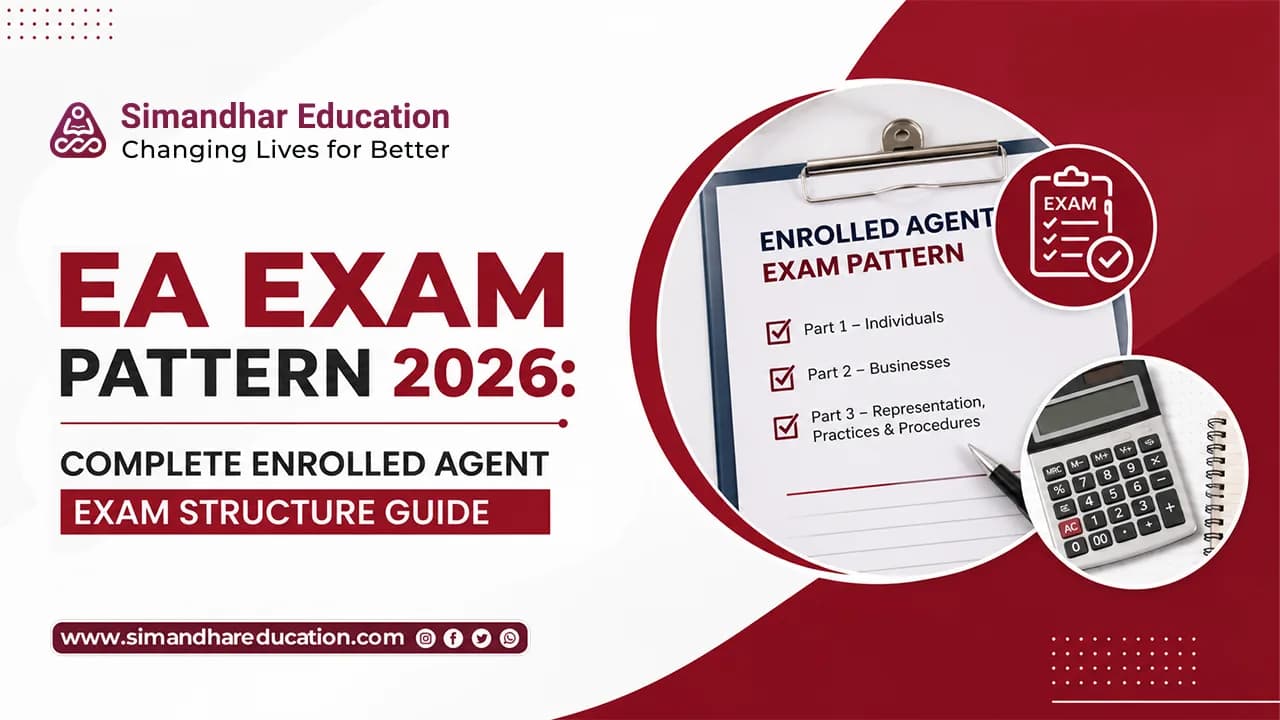
Table of Contents
- 1. What Is the Enrolled Agent Exam?
- 2. What Does the EA SEE Exam?
- 3. EA Exam Pattern briefly
- 4. What Are the Three Parts of the EA Exam?
- 5. Part 1: Individuals
- 5.1. Topics Covered
- 5.2. Skills Tested
- 6. Part 2: Businesses
- 6.1. Topics Covered
- 6.2. Skills Tested
- 7. Part 3: Representation, Practices and Procedures
- 7.1. Topics Covered
- 7.2. Skills Tested
- 8. How Many Questions Are Asked in Each Exam Part?
- 9. What Is the EA Exam Duration?
- 10. Why Understanding the EA Exam Pattern Is Important
- 11. How Is the EA Exam Different from Other Professional Exams?
- 12. What Should Candidates Expect on Exam Day?
- 12.1. Read Questions Carefully
- 12.2. Manage Time Effectively
- 12.3. Eliminate Wrong Answers
- 12.4. Review Answers
- 13. How to Build a Successful EA Study Strategy
- 13.1. Step 1: Understand the Syllabus
- 13.2. Step 2: Create Weekly Goals
- 13.3. Step 3: Practice Questions Regularly
- 13.4. Step 4: Take Mock Exams
- 13.5. Step 5: Review Mistakes
- 14. Career Benefits of Understanding the EA Exam Structure
- 15. Future of the EA Qualification
- 15.1. Growth in US Tax Outsourcing
- 15.2. Expansion of Global Capability Centers
- 15.3. Increasing Need for Tax Specialists
- 15.4. Remote Work Opportunities
Understanding the EA Exam Pattern is one of the first steps for anyone planning to become an Enrolled Agent (EA). Before starting preparation, candidates should know how the exam is structured, what topics are covered, how many questions are asked, and how the scoring system works.
The Enrolled Agent exam structure consists of three separate exam parts that together form the Special Enrollment Examination (SEE). The EA SEE exam covers Individual Taxation, Business Taxation, and Representation, Practices & Procedures. Each part contains 100 multiple-choice questions and must be passed separately. Candidates can take the exam parts in any order and complete them based on their preparation schedule.
For students, accountants, tax professionals, and working professionals, understanding the exam structure helps create a better study plan and improves confidence before appearing for the examination.
What Is the Enrolled Agent Exam?
The Enrolled Agent credential is awarded by the Internal Revenue Service (IRS) and is considered one of the highest qualifications in US taxation.
Unlike larger accounting certificates, EA focuses exclusively on:
- US Taxation
- Tax Compliance
- Tax Planning
- IRS Procedures
- Taxpayer Representation
To earn the credential, candidates must pass the Special Enrolment Examination (SEE).
What Does the EA SEE Exam?
The Special Enrolment Examination (SEE) is the official exam candidates must pass to become an Enrolled Agent.
The exam evaluates a candidate's understanding of:
- Individual Taxation
- Business Taxation
- IRS Rules and Procedures
- Ethics
- Taxpayer Representation
The SEE is designed to test practical tax knowledge that professionals use in real-world taxation roles.
EA Exam Pattern briefly
The following table provides a quick overview of the EA exam pattern.
| Component | Details |
|---|---|
| Exam Name | Special Enrolment Examination (SEE) |
| Number of Parts | 3 |
| Questions Per Part | 100 |
| Exam Format | Multiple Choice |
| Exam Duration | 3.5 Hours Per Part |
| Passing Score | 105 Scaled Score |
| Testing Mode | Computer-Based Exam |
| Exam Focus | US Taxation |
This structure allows candidates to complete each section separately rather than taking one large examination.
What Are the Three Parts of the EA Exam?
The Enrolled Agent exam structure consists of three independent sections.
Each section focuses on a different area of taxation.
Part 1: Individuals
Part 1 focuses on taxation for individual taxpayers.
This section is often considered the foundation of the EA qualification because it introduces many core tax concepts.
Topics Covered
- Filing Requirements
- Gross Income
- Adjustments to Income
- Deductions
- Tax Credits
- Tax Calculations
- Retirement Income
- Property Transactions
Skills Tested
Candidates should be able to:
- Prepare individual tax returns
- Understand tax rules
- Apply deductions and credits correctly
- Calculate tax liabilities
This section is particularly important for candidates interested in individual tax preparation and advisory services.
Part 2: Businesses
Part 2 focuses on business taxation.
Many candidates consider this section more technical because it involves multiple business structures and tax treatments.
Topics Covered
- Sole Proprietorships
- Partnerships
- Corporations
- S Corporations
- Business Expenses
- Accounting Methods
- Retirement Plans
- Business Tax Returns
Skills Tested
Candidates should be able to:
- Understand business tax regulations
- Prepare business tax returns
- Apply tax rules to various business entities
- Identify compliance requirements
This section is highly relevant for professionals working with business clients.
Part 3: Representation, Practices and Procedures
Part 3 focuses on IRS procedures and professional responsibilities.
This section distinguishes EA from many other qualifications because it emphasizes taxpayer representation.
Topics Covered
- IRS Audits
- Appeals
- Collections
- Ethics
- Circular 230
- Representation Rights
- Penalties
- Professional Conduct
Skills Tested
Candidates should be able to:
- Represent taxpayers effectively
- Understand IRS processes
- Apply ethical standards
- Handle tax controversies
This section prepares professionals for client-facing tax situations.
How Many Questions Are Asked in Each Exam Part?
Each part of the SEE exam contains:
| Question Type | Number |
|---|---|
| Total Questions | 100 |
| Scored Questions | 85 |
| Experimental Questions | 15 |
The experimental questions are included for research purposes and do not impact a candidate's score.
However, candidates are not informed which questions are experimental, so every question should be answered carefully.
What Is the EA Exam Duration?
Each exam part is allocated:
Total Exam Time
3.5 hours
This time includes:
- Reading questions
- Solving problems
- Reviewing answers
Most candidates find the timing manageable when they practice enough mock questions before the exam.
Why Understanding the EA Exam Pattern Is Important
Many candidates begin preparing for the EA exam without fully understanding how the examination is structured. This often leads to inefficient preparation and unnecessary stress.
Knowing the EA Exam Pattern helps candidates:
- Create a realistic study plan
- Allocate time effectively
- Focus on important topics
- Understand question formats
- Build confidence before exam day
When candidates understand the Enrolled Agent Exam Structure, they can prepare strategically instead of studying randomly.
For example, a candidate who knows that each exam part contains 100 multiple-choice questions can practice similar question formats during preparation. This improves both accuracy and time management.
How Is the EA Exam Different from Other Professional Exams?
Many students compare the EA exam with other accounting and finance certifications.
One of the biggest differences is its specialization.
While many professional qualifications cover accounting, finance, auditing, and management topics, the EA SEE exam focuses entirely on taxation.
This means candidates develop expertise in:
- Individual taxation
- Business taxation
- IRS procedures
- Tax compliance
- Tax representation
The specialized nature of the qualification makes it particularly valuable for professionals interested in US Taxation careers.
Another advantage is flexibility.
Candidates can:
- Take exam parts separately
- Choose their preferred order
- Study at their own pace
- Schedule exams based on readiness
This flexibility makes the EA qualification accessible to both students and working professionals.
What Should Candidates Expect on Exam Day?
Understanding the examination experience can help reduce anxiety.
Before the exam:
- Arrive early
- Carry required identification
- Follow testing center guidelines
- Remain calm and focused
During the exam:
Read Questions Carefully
Many questions contain important details that can affect the correct answer.
Manage Time Effectively
Do not spend too much time on a single difficult question.
Eliminate Wrong Answers
Using elimination techniques often improves accuracy.
Review Answers
If time permits, revisit flagged questions before submitting the exam.
Candidates who remain calm and manage their time effectively generally perform better.
How to Build a Successful EA Study Strategy
Passing the EA exam requires more than simply reading textbooks.
Successful candidates usually follow a structured approach.
Step 1: Understand the Syllabus
Review the topics covered in each exam part.
Step 2: Create Weekly Goals
Break preparation into manageable sections.
Step 3: Practice Questions Regularly
Question practice helps reinforce concepts and identify weak areas.
Step 4: Take Mock Exams
Mock exams simulate real testing conditions and improve confidence.
Step 5: Review Mistakes
Many students improve significantly by analyzing incorrect answers and understanding why mistakes occur.
Consistency is often more important than studying for long hours occasionally.
Career Benefits of Understanding the EA Exam Structure
Candidates who understand the EA exam pattern often prepare more effectively and complete the qualification faster.
Once certified, they can pursue opportunities in:
- US Taxation
- Tax Compliance
- Tax Consulting
- Tax Advisory
- Tax Research
- Global Capability Centers
- Accounting Firms
- Multinational Corporations
The EA credential is highly valued because it demonstrates specialized taxation expertise.
As organizations continue expanding their tax functions globally, professionals with strong taxation knowledge are expected to remain in demand.
For many candidates, understanding the exam structure is the first step toward building a successful career in US taxation.
Future of the EA Qualification
The demand for taxation professionals continues to increase as tax regulations become more complex.
Several trends are supporting the growth of the EA credential:
Growth in US Tax Outsourcing
Many US firms rely on India-based teams for tax support services.
Expansion of Global Capability Centers
GCCs continue to hire professionals with specialized tax knowledge.
Increasing Need for Tax Specialists
Organizations seek professionals who understand evolving tax regulations.
Remote Work Opportunities
Many EA professionals support international clients while working from India.
These trends suggest that the EA qualification will continue to offer strong career opportunities in the coming years.
Planning to take EA? Explore our EA course